Cocoa Agroforestry:
Regenerative Challenges and FarmTree Solutions
FarmTree supports cocoa programmes in optimising regenerative designs. It provides relevant metrics like long-term supply security, cocoa system renewal, farmers' incomes, diverse production, and carbon insetting projections, the information that cocoa buyers, cooperatives, climate funds and farmers require.
On this page we elaborate on how to phase FarmTree into your programme, and the costs and benefits of working with FarmTree experts and the FarmTree Platform.
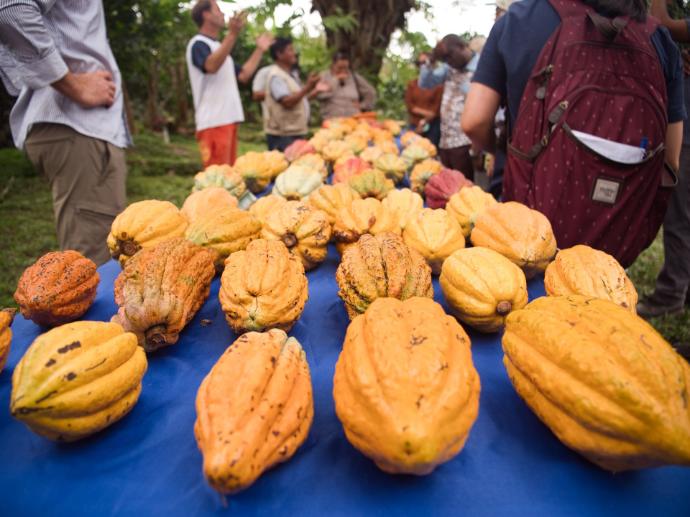
Cocoa Scenarios:
Design & Understand
How can you reduce long-term risks, optimise production, and maximise the farmer's net benefit over time through regenerative cocoa farming?
The "Design & Understand" modules help to compare and evaluate design choices such as shade tree density, species mix, and the trade-offs between carbon, farmer income, and yields, before a single tree is planted.
Download Design Cost Comparison With and Without FarmTree
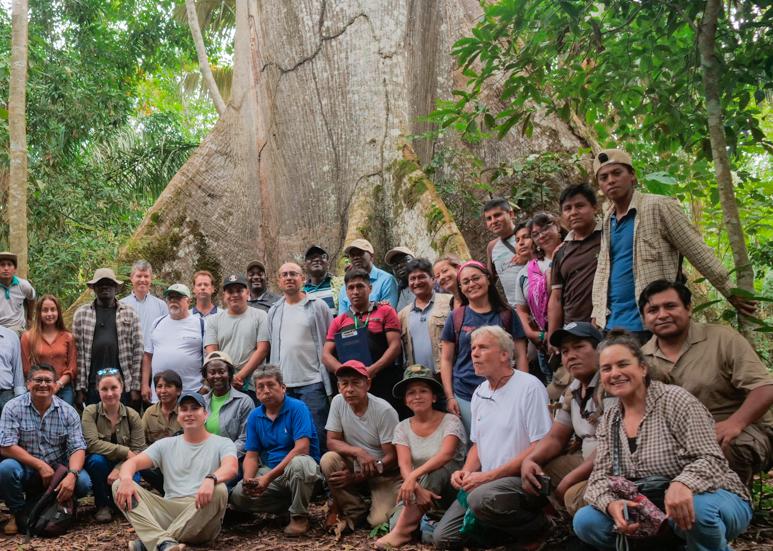
Regenerative Cocoa:
Learn & Capture
Building on the design phase, Learn & Capture is where FarmTree becomes embedded in your ongoing programme. FarmTree experts train project staff, who contribute deep local knowledge that no scientific publication captures.
The locally grounded model and data become the foundation for monitoring and reporting. One evidence base for all KPIs and stakeholders. To be integrated in the Project PM&E routines.
Download Learn&Capture Cost Comparison With and Without FarmTree
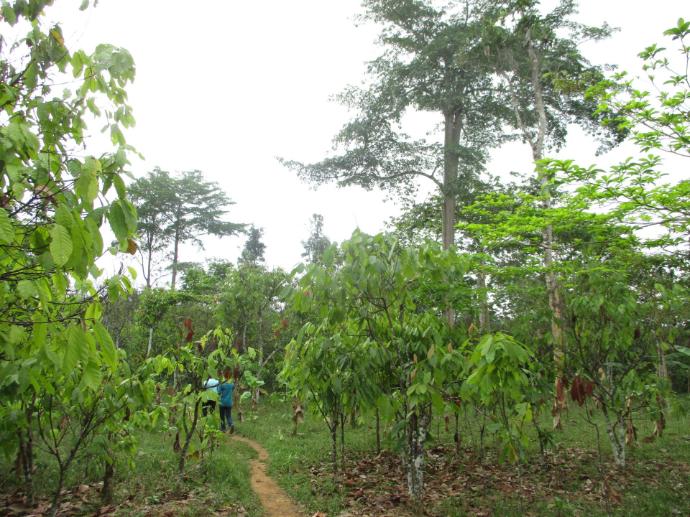
Cocoa Portfolio: Operate & Scale
Once Learn & Capture is in place for your first location, scaling to additional regions is straightforward. The agronomic database — varieties, labour norms, input costs, prices — is 90% reusable across locations. FarmTree automatically adjusts for local climate and topography, so performance projections remain accurate.
Every additional cooperative or target area adds only marginal cost. Your entire cocoa portfolio reports on the same evidence base.
Full portfolio management into your system requires an inventory of use cases within your organisation.
Module: Cocoa Regenerative Production Planning
From objectives to a credible cocoa stand design
Shifting a cocoa farm towards regenerative production always involves trade-offs.
Which shade trees make sense — fruit trees, timber species, or nitrogen-fixing varieties? At what density? How do you balance disease pressure reduction, microclimate improvement, and farmer income over a 20-year horizon? What carbon insetting volumes can you expect? And how do you present these choices to a farmer who is rightly cautious about anything that reduces his cocoa yield in the short term?
FarmTree supports organisations in designing credible, data-backed cocoa farm plans — for individual farms or for uniform production systems across a cooperative or sourcing region. We model the full range of regenerative options, from shade tree integration and phased stand renewal to intercropping and soil improvement, so programme teams can present farmers with evidence rather than opinion.
Together with your team, we translate programme objectives into optimised farm designs, including shade tree species and planting patterns, disease management options, agroforestry practices already used in the area, and the financial projections farmers and investors need. Results are presented in a clear business case and made available in the FarmTree Platform, where designs can be reviewed, updated and adjusted as conditions evolve.
Variables for cocoa regenerative production planning
- Shade tree species selection — fruit trees, timber, nitrogen-fixing, or multi-purpose
- Shade tree density and planting patterns — spacing, rows, and integration with cocoa layout
- Phased cocoa stand renewal — uprooting and replanting ageing stands without losing farm income
- Disease management options — the role of shade, pruning, and variety selection in reducing black pod and swollen shoot pressure
- Agroforestry practices already present in the area — building on local knowledge and validated regional scenarios
- Soil improvement inputs — biochar, compost, and organic matter management
- Labour requirements by season — ensuring new practices are adoptable within farmers' existing workload
What this module delivers
- Cocoa farm designs with shade tree densities
- Profit & loss projections for farmers — including cocoa yield, shade tree revenues, and diversified income over 20–50 years
- Carbon Insetting Volume estimates
- Transparent assumptions and scientific references
- Access to the FarmTree Platform for review and iteration
- A library of validated scenarios for the project area, reusable across the portfolio
Typical use cases
- Preparing resilient cocoa farm designs for farmer training programmes run by companies; also for carbon insetting estimates
- Comparing regenerative production options before implementation so farmers can evaluate real costs and benefits
- Showing how diversified production (fruit, timber, firewood) improves household income beyond cocoa
- Preparing the investment case for company-supported microfinance or income accelerator programmes
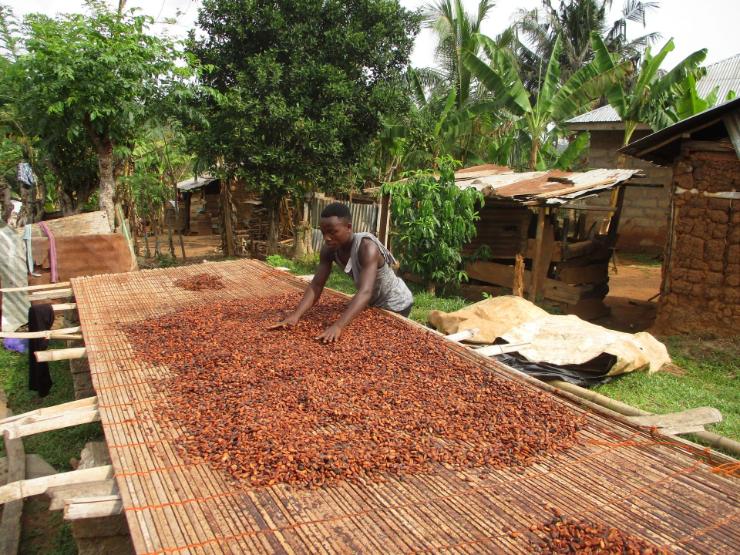
- Practical details
- Scope: Individual cocoa farms or uniform production areas
- Process: Intake → design iteration → review → final presentation
- Track record: Ghana (with Tropenbos Ghana)
- Cost indication: €3,000 – €9,500 (depending on complexity)
Interested in discussing your farm planning needs? Contact FarmTree
Module: Cocoa Project Investment Case Development
From farm plans to a landscape-scale production and investment strategy
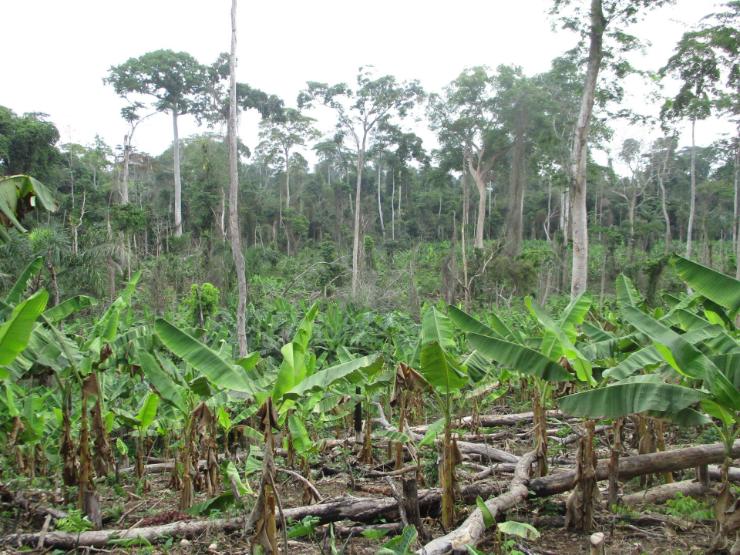
When a cocoa company sources from an area with 10,000 or 20,000 farmers, the challenge is not just farm design — it is continuity. Many sourcing regions in Ghana and Côte d'Ivoire face a dual crisis: ageing cocoa plantations with declining yields, and ageing farmers with limited capital to invest in renewal. Without a structured replantation plan, production continuity is at risk — for the farmer, for the cooperative, and for the sourcing company.
FarmTree helps project developers and cocoa companies translate farm-level designs into a landscape-scale investment case — one that answers the questions that financiers, climate funds, and company procurement teams actually ask: how do we phase the renewal of poorly productive stands without leaving farmers without income? What does production look like across the full sourcing region during and after replantation? And what is the return on the investment in shade trees, soil improvement, and farmer support?
Based on a limited number of representative farm designs — typically 3 to 5 — FarmTree models costs, production continuity, and environmental benefits at landscape scale. The result is a clear economic and financial analysis, supported by transparent assumptions and dashboards that guide decision-making and reporting.
What makes cocoa investment cases distinctive
- Ageing stands. A credible investment case must account for the current state of plantations — their age, productivity, and disease burden — and model a realistic phased renewal schedule that maintains farm income throughout.
- Replantation continuity planning. FarmTree calculates production trajectories across the full renewal cycle.
- Regenerative system design. Renewal is modelled as a transition into a regenerative system — with shade trees, improved varieties, and soil improvement inputs such as biochar and compost — so the investment case reflects the full range of costs and benefits, not just replanting costs.
- Scale. The platform can load data for 10-20k of farms and model portfolio-level production continuity and financial performance — providing the sourcing company with a multi-year supply projection alongside the farm-level investment case.
Typical use cases
- Preparing a multi-year sourcing security plan for cocoa sourcers
- Assessing the return on investment of a phased replantation programme across 5,000 to 20,000 farms
- Developing funding proposals for climate or development finance institution
- Comparing intervention strategies: full replantation versus rehabilitation, different shade tree systems, different phasing schedules
- Building the business case for company-supported microfinance or income accelerator programmes tied to farm renewal
Practical details
- Scope: Sourcing regions, cooperatives, landscapes, or multi-project portfolios — from 1,000 to 20,000+ farms
- Process: Project intake → representative farm design (10–15 farm types) → landscape-scale aggregation → production continuity modelling → financial analysis and dashboard
- Track record: Ghana (agroforestry cost-benefit analysis in cocoa sourcing regions); Côte d'Ivoire (shade tree integration and replantation scenarios)
- Cost indication: €15,000 – €60,000 depending on scale, number of farm types, and complexity of the replantation schedule
Want to explore whether this fits your project? Contact FarmTree
Module: Capture Project Trees & Crops
Prepare for localised farm plans at scale
After a project is designed and funded, the real work begins.
Teams move from planning to implementation — and new questions arise.
How do we explain the investment case to farmers?
How can farmers show their investment case to micro credit or other financers?
How do we track inputs, labour and outcomes in a consistent way?
And how do we respond confidently to questions from financiers, governments or carbon buyers once the project is running?
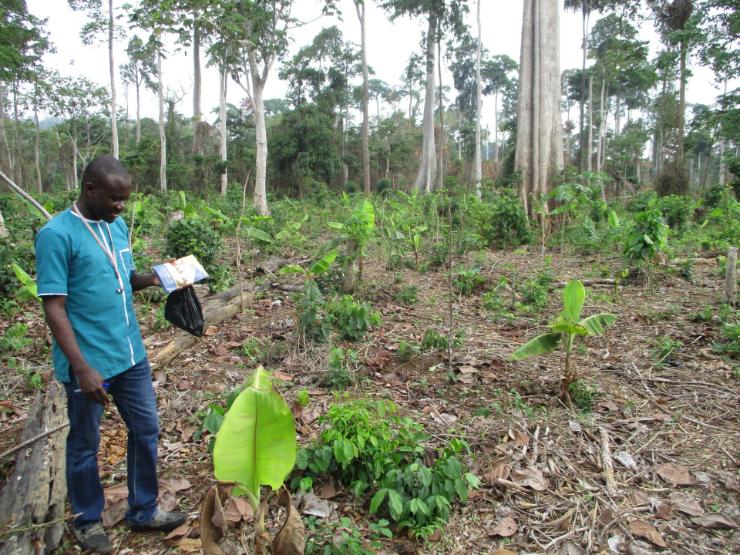
In this module, FarmTree experts and project staff collect local data, to improve the quality of the default FarmTree data. This to develop a fully localised online data set, that feed into farm planning tools.
What this module delivers
- Tree, crop and input data calibrated in your project area
- Access to your Data on the FarmTree Platform
- A Team Administrator manages access to project experts
- Kobo Toolbox questionnaires and farm plots baseline scenarios storage, for further processing
Typical use cases
- You do a baseline survey and want to report Business-As-Usual farm performance - such as carbon, livelihoods, economics
- Your project staff wants to provide farm-level indivicual plans
Practical details
- Scope: Landscapes with hundreds of farms
- Process: Project initiation → collect local data → Calibration and local price indication → processing and storing online → staff training → PM&E
- Track record: OCRI, FAO-Benin, Morogoro
- Cost indication: €15,000 – €30,000; after which a project annual license fee of €2,000 - €5,000 per country (depending on scale and complexity). FarmTree may second an expert for a certain period.
Want to explore whether this fits your project? Contact FarmTree
Module: Learn to Operate the Project Platform
Enable Staff to Plan and Monitor Project Impact in a cocoa production context
Learn to Operate the Platform is about building the capability to plan and monitor Cocoa sustainability projects with confidence.
FarmTree supports Cocoa project teams by helping them translate project assumptions into practical data routines. We work with your team to define what needs to be measured, how data is collected in the field, and how it is structured so it can be used — not just reported.
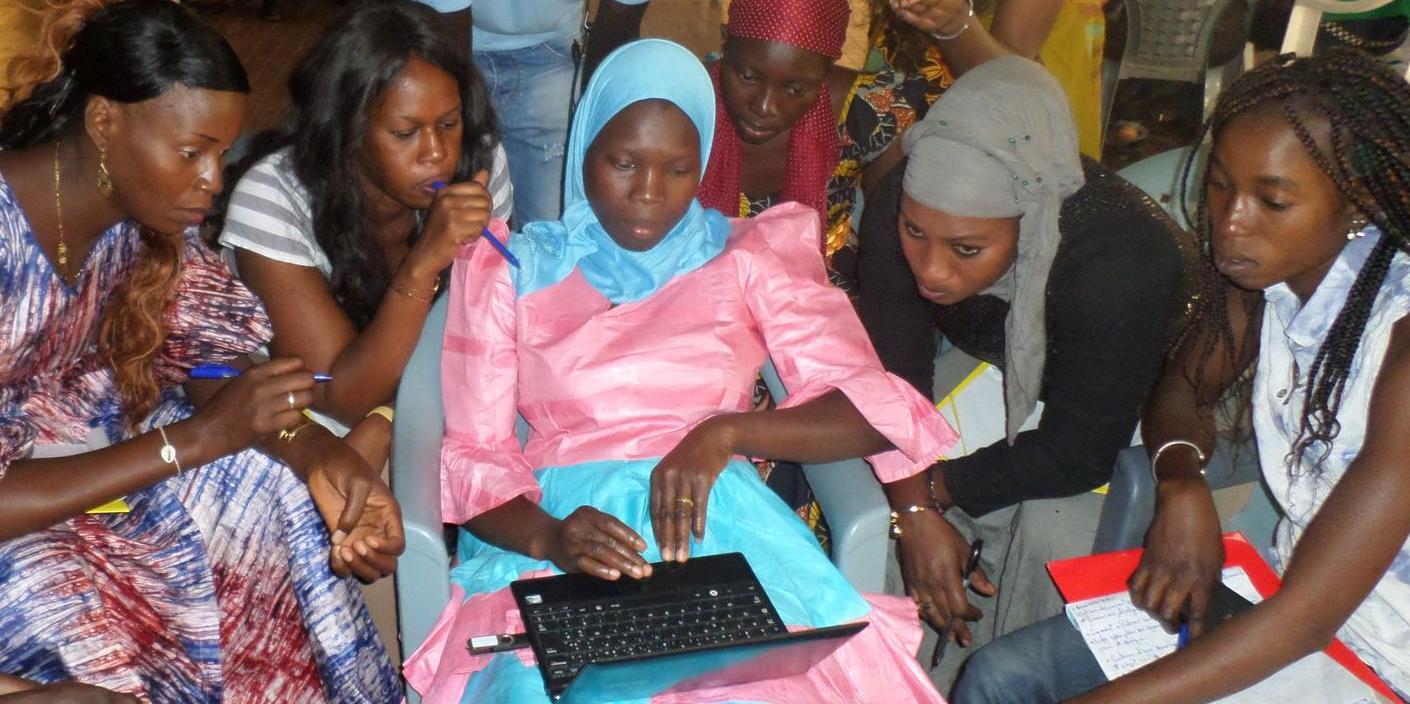
Rather than outsourcing monitoring or analysis, Learn to Operate helps Cocoa cooperatives and companies to develop in-house capability.
Teams learn how to survey project interventions at farm level relevant for cocoa production. through simple surveys, process changes into farm carbon stock, cash flows, and other performance indicators, and assess project impact year-after-year with updated operational progress. FarmTree experts stand by for sparring and on-the-job training, as well as receiving feedback.
What this module delivers
- Preparing teams for project rollout
- Know-how to design and implement farm surveys and upload data for processing & reporting
- Staff capability to generate current and future Farm Performance for investment planning
- Staff capability to report impact at project scale
Typical use cases
- De-risking Agroforestry interventions for individual farmers, e.g., in farmers field schools
- Reducing farm surveying time and yet report on multi-KPI interventions impact
- Control over intervention risks
Practical details
- Scope: Cocoa Projects targeting thousands of farms
- Process: Project partner identifies staff → FarmTree facilitates live training → Project staff tests data collection & processing with FarmTree support → Project develops Standard Operational Procedures for farm planning and project monitoring
- Track record: OCRI, FAO-Benin; Morogoro
- Cost indication: Live training: €15,000 – €30,000; Team support online or through seconing an expert for a certain period.
Want to explore whether this fits your project? Contact FarmTree
Module: Project Portfolio Planning & Monitoring
As a multi-national cocoa processor, you work in different countries on different projects. How can I report on those projects with comparable metrics?
After the Capture Project and Learn to Operate the Project Platform, your organisation is in a strong position to embark new projects, derisk interventions and plan for impact, and report to investors.
Note that for carbon monitoring and certification, often specialised measuring and reporting services are required. FarmTree helps you to broaden the metrics you report on. Based on local data and science of course.
What this module delivers
- Access to multiple projects in the FarmTree Platform
- Online and offline tools for data processing and reporting
Typical use cases
- Manage multiple projects and sub-projects at the same time
Practical details
- Scope: Project Portfolios
- Process: Project partner identifies staff → FarmTree facilitates
- Track record: Rabobank Acorn, HRNS, Helvetas, Solidaridad
- Cost indication: License fees varying from EUR 10k to EUR 80k, depending on portfolio scope
Want to explore whether this fits your project? Contact FarmTree
Module: External Linkages
for Cocoa-Monitoring & Planning in Management Information Systems
The FarmTree Model is accessible through an API, allowing to integrate the FarmTree Model in your own platform.
Further, FarmTree developed Kobo Toolbox forms, with which you can carry out farm-level data collection for multi-KPI reporting and monitoring, across the project.
What this module delivers
For Data Collection, FarmTree provides:
- Pre-configured KOBO questionnaires to create and store FarmTree Plot Scenarios.
- Training to manage surveys and create before- and after-project KPI time series.
For Field Data Processing:
- Access to the FarmTree Model through an API
- API documentation
- Support by our IT staff
Typical use cases
- You have a platform and want to enable users to make Agroforestry Business Plans
Practical details
- Scope: Platform operators
- Process: Project partner identifies requirements → FarmTree facilitates requirements
- Track record: Under development: SAN, Arara
- Cost indication: like Platform Access
Want to explore whether this fits your project? Contact FarmTree